Zoomex vs Bybit: Best for High Leverage Futures or Safer Spot Trading?
Zoomex vs Bybit isn’t just about fees—liquidity, slippage, UX, and withdrawals can matter more. Bybit fits pro traders who want deep liquidity and a full ecosystem. Zoomex suits many users who prefer a simpler experience with value-driven promos and easy flow.
Choosing a trading platform isn’t just about picking the biggest name or chasing the lowest headline fee. What really shapes your results is the real-world experience: how fast you can enter and exit trades, whether your orders fill cleanly, how predictable withdrawals are, and whether the platform stays smooth when markets get volatile.
That’s what makes Zoomex vs Bybit a useful comparison—especially when you factor in their current promos.
Bybit is widely recognized as a major exchange, particularly for derivatives. It has strong brand trust, deep liquidity across many popular pairs, and a trading environment built for active users who want lots of markets and consistent volume. Right now, Bybit is giving $20 welcome bonus plus 15% off trading fees, which can be a nice extra if you’re starting out or testing the platform again.
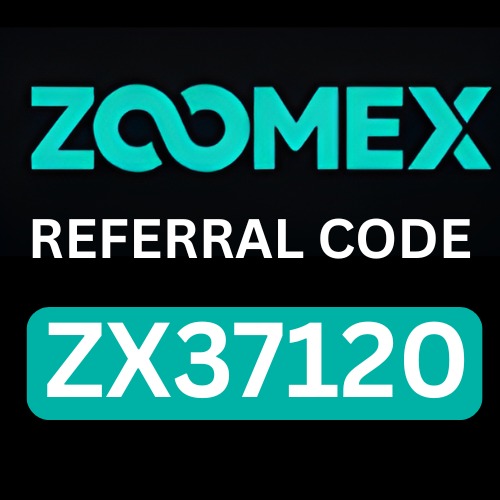
Zoomex, on the other hand, positions itself as more trader-first and streamlined. The experience is designed to feel simpler and easier to navigate, which matters if you don’t want a “control panel” vibe just to place a trade. On the offers side, Zoomex is currently advertising a much bigger incentive if you apply ZOOMEX Referral Code “ZX37120” you will get $14,000 welcome bonus and 20% off trading fees—a strong draw for users who value promotions and want to reduce costs while scaling.
Quick Verdict: Which One Should You Choose?
Choose Zoomex if you want…
A cleaner, simpler trading experience that’s easier to learn and quicker to use day-to-day. Zoomex tends to feel less cluttered and more focused on the essentials, which can be a big plus if you don’t want to dig through endless menus just to place trades or manage positions. It can also be a good fit if you mostly trade major pairs and aren’t regularly placing very large orders where deep order-book liquidity is the main priority.
Zoomex may also appeal to you if you like promotions or value perks that can lower your effective costs—just make sure you read the terms, time windows, and eligibility rules. For example, platforms like Zoomex sometimes run limited-time spot promos such as reduced or even zero trading fees for new users.
Choose Bybit if you want…
Stronger liquidity and execution across a wider range of popular spot and derivatives markets, especially during fast-moving conditions. Bybit also leans more “pro ecosystem,” with broader tools, deeper infrastructure, and more established visibility around transparency features like Proof of Reserves-style reporting and audits.
Exchange Overview: Zoomex vs Bybit at a Glance
When comparing Zoomex vs Bybit, it helps to start with the basics: both are centralized crypto exchanges that support spot trading and derivatives, but they’re built with slightly different priorities in mind.
What Zoomex is
Zoomex is a centralized crypto exchange designed to feel straightforward and trader-friendly. The platform emphasizes a cleaner layout, simpler navigation, and a more streamlined workflow—useful if you want to place trades, manage positions, and check balances without a lot of extra noise. That “keep it simple” approach can be especially appealing for everyday traders who focus on major pairs and want a smooth experience across desktop and mobile.
On the pricing side, Zoomex publicly lists its spot fees in its help resources, with 0.1% maker and 0.1% taker for spot markets. Like many exchanges, Zoomex also runs promotional campaigns from time to time, including limited-time offers aimed at new users. These promotions can reduce effective trading costs—particularly for smaller accounts—when used carefully and within the stated terms.
What Bybit is
Bybit is one of the more established global exchanges, known especially for futures and perpetual contracts. It supports a broad suite of products (availability can vary by region) and publishes detailed fee schedules, including tiered structures for active traders.
Bybit also stands out for its visibility around transparency resources, including a Proof of Reserves portal and organized audit-related materials. For traders who prioritize liquidity depth, market variety, and a more “pro” ecosystem, Bybit is often a strong benchmark in the centralized exchange space.
If you’re signing up on Zoomex, don’t skip the bonus step—use this guide: How to Find Zoomx Referral Code – Claim 14,000+ USDT, Get 5 USDT Gift & Enjoy 20% Off Trading Fees.
Fees Comparison: Spot + Futures (And the Costs Traders Forget)
Fees matter—but in real trading, the total cost is bigger than just maker/taker rates. In a true Zoomex vs Bybit fees comparison, you also need to factor in spread, slippage, and funding, because those “invisible costs” can easily outweigh a tiny fee difference on paper.
Spot Trading Fees
At the baseline level, both platforms look very similar for spot:
Zoomex spot fees: Zoomex’s help resources list 0.1% maker / 0.1% taker for spot pairs.
Bybit spot fees (non-VIP baseline): Bybit commonly lists 0.1% maker / 0.1% taker for spot, with VIP tiers that can reduce fees for higher-volume traders.
What this means: for most casual spot traders, it’s close to a tie on the published rate.
Where Zoomex can feel more cost-friendly in practice is when it runs value promotions—for example, limited-time spot fee discounts or even “zero fee” windows for eligible new users. That’s not a guaranteed advantage, but it can lower effective costs while you’re testing the platform or trading smaller size—assuming you follow the promo terms.
Futures / Perpetual Fees
On derivatives, published rates can vary by product and tier:
Bybit (non-VIP example): often shown around 0.01% maker / 0.06% taker for many perpetual markets (VIP tiers may improve this).
Zoomex derivatives: fees can vary by market and account level. Some third-party summaries cite ranges around 0.02% maker / 0.06% taker, but the safest move is to verify the exact fee shown inside your account for the specific contract you trade.
The Costs Traders Forget
With futures, your real cost isn’t just the trading fee. Watch for:
Funding rates (periodic payments on perps that can add up)
Spread (often wider on smaller pairs)
Slippage (the hidden “tax” of market orders, especially in thin books)
Practical take: If you use market orders often, liquidity + spread usually matter more than tiny fee differences. If you mainly use limit orders, you can control costs better—and promos can have more impact.
In general, Bybit tends to suit traders who prioritize deep liquidity and consistent fills, while Zoomex can be a strong day-to-day option for traders who want a simpler workflow plus cost-saving perks when available.
Liquidity, Spread & Slippage: Where Trading Performance Is Won or Lost
In a Zoomex vs Bybit comparison, this is where trading performance is often won or lost. Liquidity is the difference between “I got the price I expected” and “why did my fill come in 0.4% worse?” That’s why traders searching Zoomex vs bybit price usually aren’t only talking about fees—they’re talking about the real cost of execution.
Why liquidity matters
Strong liquidity typically leads to:
Tighter spreads, so you lose less on entry and exit.
Deeper order books, meaning larger orders create less price impact.
More stability during volatility, when thinner books can widen fast and trigger extra slippage.
Slippage isn’t always obvious on a fee page, but it can quietly become one of your biggest costs—especially with market orders, fast moves, or lower-liquidity pairs.
Bybit’s typical advantage
Bybit is widely known as a high-activity venue across many major spot and derivatives markets. In practice, that often translates into better depth and more consistent fills for the same order size, especially on popular perpetual contracts. For traders who prioritize execution quality, many Zoomex vs bybit review discussions point to Bybit’s liquidity as a key strength.
Where Zoomex performs well for most traders
Zoomex can still be a strong day-to-day option if you trade major pairs, keep size reasonable, and use limit orders or careful execution. For a lot of traders, the platform they can operate confidently—fast, clean, and without UI friction—ends up being the Best Crypto Exchange for their routine.
Bottom line: if you need maximum depth, Bybit often leads. If you want a smoother workflow and efficient daily trading, Zoomex can be an excellent fit.
Trading Experience & Features: The Day-to-Day Difference
In a Zoomex vs Bybit Comparison, the biggest differences often show up in daily use—not on the homepage. Fees and bonuses matter, but your long-term performance is heavily influenced by how quickly you can execute, how easily you can manage risk, and whether the platform stays clear and predictable when markets move fast. That’s why many traders look closely at crypto exchanges specializing in either streamlined trading or feature-heavy ecosystems.
Zoomex: A smoother trading workflow
Zoomex’s main advantage for many users is the workflow. The interface feels straightforward, less cluttered, and easier to learn—especially for new to intermediate traders who want to focus on charts and decision-making rather than hunting through menus. If you’re the kind of trader who wants a clean layout and faster navigation, Zoomex can feel like a more efficient Crypto & Bitcoin Trading App for everyday use.
Zoomex also often leans into trader perks and limited-time promotions, such as spot-fee discounts. While promotions shouldn’t be the reason you choose a platform, they can reduce early friction costs as you build consistency and refine execution.
Bybit: More depth, more ecosystem
Bybit is built for traders who want more tools, more product variety, and a broader platform ecosystem. It’s popular with derivatives traders and users who like having advanced features and multiple product categories under one roof. For experienced traders who want “everything available,” Bybit can feel like a powerful Crypto & Bitcoin Trading App—especially if you’re using more advanced strategies.
Proof of Reserves: good signal, not a guarantee
Bybit provides a Proof of Reserves portal and links audit materials, including published reports.
That’s a positive transparency signal because it gives users ways to verify certain reserve claims.
However, PoR has limitations. Industry explainers point out that PoR doesn’t automatically prove:
total liabilities,
operational risk controls,
or how the exchange behaves under extreme stress.
So treat PoR as: “better than nothing,” not “perfect safety.”
Zoomex and transparency signals
Public trackers like CoinGecko include a Proof-of-Reserves related scoring/labeling concept on exchange pages (methodology varies).
Separately, Zoomex-related media pieces emphasize “transparency” and “clarity” positioning, though you should treat PR-style articles as marketing rather than hard evidence.
Non-negotiable account security settings (use these anywhere)
No matter which exchange you pick:
Enable 2FA (authenticator app, not SMS if you can avoid it)
Turn on withdrawal address whitelist
Use an anti-phishing code if offered
Don’t trade on your main holdings wallet—keep trading funds separate
Deposits, Withdrawals, KYC & Support: Where Platforms Feel “Good” or “Bad”
In any Zoomex vs Bybit discussion, people talk a lot about fees and features—but the platform often feels “good” or “bad” based on one practical thing: how smooth it is to deposit, trade, and withdraw. Even among Top Crypto Exchanges, the day-to-day experience can vary a lot once you move real funds.
KYC reality check
KYC requirements can depend on your region, payment method, and withdrawal limits. Some exchanges may allow limited access without verification at first, then apply tighter restrictions later. That’s why it’s risky to choose a platform based on rumors.
In a real Zoomex vs Bybit Comparison, the best approach is to judge what you can confirm:
what your account dashboard actually allows,
what’s supported in your region, and
whether you can complete a small test withdrawal without hassle.
The 30-minute exchange test (do this first)
Before committing meaningful funds, run a quick “trust test”:
Deposit a small amount
Place a couple of trades (spot, and futures if you use them)
Withdraw immediately
Check speed, fees, and friction
If a platform passes this test cleanly, you’re in a much safer position to scale up.
Why Zoomex can feel better day-to-day
For many users, Zoomex’s strength is low friction. The workflow tends to feel simpler, with less menu-hunting and fewer distractions—helpful when you’re moving quickly or managing multiple positions. When an exchange feels easy to operate under pressure, that’s a real advantage, and it’s often what keeps traders coming back.
Promotions, Rewards & Bonus Traps: Use Carefully (But Use Smart)
In a Zoomex vs Bybit comparison, promotions can look like the easiest “win,” especially if you’re trying to reduce costs early on. Used correctly, rewards and fee campaigns can genuinely help everyday traders—particularly when you’re building a routine, testing strategies, or trading smaller spot sizes.
Zoomex has previously run trader-focused campaigns such as limited-time spot fee discounts, including periods where new users could get reduced or even zero spot fees (depending on the promotion terms and eligibility). When offers like that are active, they can lower your effective trading costs—especially if you’re placing frequent small spot trades or onboarding a new account and want to evaluate the platform without paying unnecessary fees.
If you’re signing up, it’s also worth checking the ZOOMEX Referral Code “ZX37120”, which is currently promoted with a $14,000 Welcome Bonus and 20% trading fees off. For many traders, that combination can be valuable during the first few weeks—particularly if you’re actively trading and want to cut costs while you learn the platform.
That said, every bonus comes with a rulebook. Promotions may include conditions such as:
Trading volume requirements to unlock rewards
Time windows (only valid for a limited period after signup)
Voucher/bonus rules (bonuses often aren’t directly withdrawable)
Possible withdrawal limitations tied to eligibility, KYC, or bonus status
This is where “bonus traps” happen—not because promos are always bad, but because traders assume a reward is the same as cash.
Zoomex vs Bybit Comparison Table: Side-by-Side Features, Fees, Liquidity & Bonuses
| Category | Zoomex | Bybit |
|---|---|---|
| Best for | Everyday traders who want simplicity + smooth UX | High-liquidity trading, active futures, broader ecosystem |
| Spot fees (baseline) | 0.1% maker / 0.1% taker (published) | 0.1% maker / 0.1% taker (non-VIP example; tiered) |
| Futures fees (baseline) | Varies; commonly cited around 0.02% maker / 0.06% taker (verify per market) | Common non-VIP example: 0.01% maker / 0.06% taker (tiered) |
| Liquidity | Good for majors; smaller overall footprint | Generally stronger depth and liquidity |
| UX / simplicity | Strong “trading-first” flow | Powerful but can feel complex |
| Transparency / PoR | Public trackers show PoR-related signals; marketing emphasizes transparency | Proof of Reserves portal + published audits |
| Promotions | Often strong; e.g., limited-time zero spot fees for new users | Promotions exist but typically not the core differentiator |
| Best “first exchange” feel | High | Medium (depends on user experience level) |
Real-World Scenarios: Which One Fits You?
When comparing Zoomex vs Bybit, the “best” choice depends less on hype and more on how you actually trade. Here are a few real-world scenarios to help you decide.
Scenario 1: Beginner starting with $100–$500
For many beginners, Zoomex can be a smoother starting point because the platform tends to feel easier to navigate and less overwhelming. A simpler interface reduces the chance of basic operational mistakes—like picking the wrong order type or missing key settings. If promos or fee discounts are available, they can also help lower early costs while you’re learning.
If you plan to try futures, start small: use isolated margin, keep position size tiny, and set strict stops. The goal at first is consistency, not big wins.
Scenario 2: Active futures trader (multiple trades/day)
If you trade frequently and care most about execution quality, Bybit often has an edge thanks to stronger liquidity in many major markets. That can mean tighter spreads and less slippage, especially during volatility.
That said, if your trade size is moderate and you value a clean workflow, Zoomex can be a comfortable daily futures platform—particularly on major pairs with limit orders.
Scenario 3: Larger-size trader needing maximum depth
This one is straightforward: if you regularly place large orders and depth is the priority, Bybit usually fits better due to broader liquidity.
Scenario 4: You hate complex platforms and just want to trade
This is where Zoomex tends to shine. A more intuitive, streamlined setup can improve execution simply because you move faster, stay focused, and avoid unnecessary distractions.
Final Verdict: Which One Is Better?
If your main priority is maximum liquidity and consistent execution, especially for larger-size or high-frequency futures trading, Bybit is often the safer “big venue” choice. It typically offers deeper order books in major markets, which can help reduce slippage when you’re moving size. Bybit also provides visible transparency resources, including a Proof of Reserves portal and published audit-related materials, which may matter if you prioritize verification and reporting.
On the other hand, if your focus is the day-to-day trading experience, Zoomex can be a better fit. Many traders prefer a platform that feels cleaner, easier to navigate, and more centered on the actions that matter—placing orders, managing positions, and tracking risk—without getting lost in endless menus. That kind of simplicity isn’t just about comfort; it can support better performance. With a smoother workflow, you’re often quicker on entries and exits, less distracted during volatility, and more consistent with your trading routine over time. If you’re getting started, you can also use the ZOOMEX Referral Code “ZX37120” to access the current offer: a $14,000 Welcome Bonus plus 20% off trading fees
If you still decide to go with Bybit Referral Code, use your referral link and apply the code “ORN6M5” to unlock a $20 welcome bonus and 15% off trading fees
Detailed FAQs: Zoomex vs Bybit
1) Is Zoomex good for futures trading?
Yes, Zoomex can be a solid futures platform for everyday traders—especially if you focus on major pairs and rely on limit orders for better control. The smart move is to start with small size, confirm the exact fee rate shown in your account for your chosen contract, and test execution during normal and volatile conditions.
2) Is Bybit better for professional traders?
Often, yes. Bybit is commonly preferred by higher-volume traders who prioritize deep liquidity, broad market coverage, and more consistent fills across popular derivatives markets.
3) Which has lower fees: Zoomex or Bybit?
For spot trading, both commonly list 0.1% maker / 0.1% taker as a baseline. On futures, Bybit often shows example non-VIP rates around 0.01% maker / 0.06% taker, while Zoomex is frequently cited in third-party summaries around 0.02% maker / 0.06% taker—but always verify inside the platform. Keep in mind: spread, slippage, and funding can cost more than small differences in fee rates.
4) Which is safer?
No exchange is perfectly safe. Use best practices: enable 2FA, set withdrawal whitelists, do test withdrawals, and avoid storing long-term holdings on any exchange. Bybit’s Proof of Reserves and audit-related materials can be a helpful transparency signal.
5) Does Proof of Reserves guarantee safety?
No. Proof of Reserves can improve transparency, but it doesn’t automatically prove total liabilities or remove operational risk.
6) Which is better for beginners?
Zoomex is often easier for beginners because a cleaner workflow reduces mistakes and speeds up learning.
7) Which is better for small accounts?
Zoomex can be a good fit for smaller balances, especially when promotions reduce effective costs and the platform feels easier to operate.
8) Can I use both?
Yes. Many traders use Zoomex for a streamlined routine and Bybit for maximum liquidity on specific markets.
9) What’s the safest way to test an exchange?
Deposit small → trade a little → withdraw immediately → confirm speed and friction. Repeat before scaling up.
10) What risk settings should I use for leverage?
Start with isolated margin, low leverage, hard stop-loss, and small position sizing. Leverage is a tool—not a strategy.